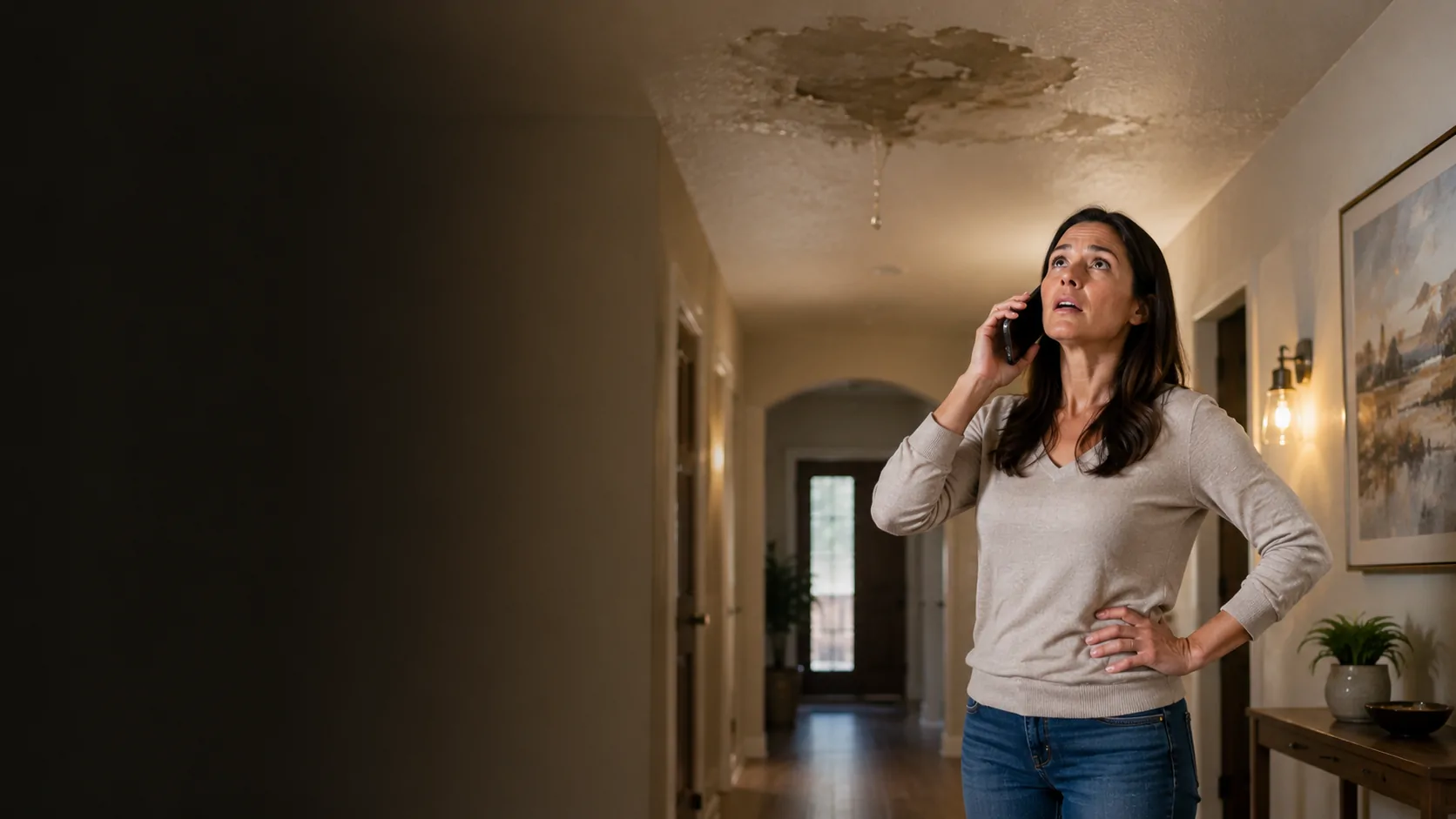
Emergency Plumber, On the Way in 60 Minutes
An emergency plumber has exactly two jobs: get there fast, and be straight about the price. All Star Plumbing does both, around the clock. Call at any hour and a licensed tech is rolling within minutes, arriving inside 60, with the parts to fix most failures on the first visit. The trip costs $0, the estimate is written, and nothing is repaired, cut, or replaced until you've approved the number.
- 60-minute response, 24/7
- $0 service call
- Free written estimate before any work
- Licensed, family-owned since 2008
Heads up: we’re an emergency crew for water and drains. Pool and spa equipment and irrigation systems aren’t our scope. Burst pipes, sewage backups, no hot water, and severe clogs? That’s exactly us.
What is an emergency plumber?
An emergency plumber is a licensed plumber who responds to active plumbing failures, burst pipes, sewage backups, failed water heaters, and severe clogs, at any hour and without an appointment. The work has two halves: stop the damage first, then repair what failed. All Star Plumbing provides this response 24/7 with a 60-minute arrival standard, a $0 service call, and a written estimate before any repair begins.
No Service Call Fee
It costs nothing for us to come out and take a look. You get a free written estimate before any work, day or night.
Truck Rolls Day or Night
Burst pipes don't keep business hours. We isolate the line, cap the water, and stop the damage before it spreads.
Same-Trip Repair
Common emergency parts ride on the truck. Most burst-pipe, heater, and angle-stop calls are fixed before we leave.
Which plumbing problems count as emergencies?
A handful of failures make up nearly every genuine plumbing emergency. We get to your door fast for any of them, and each repair is explained in depth once the crisis is contained.
Burst Pipe & Major Leak
Pressurized water escaping a supply line does damage by the minute. The immediate move is isolation, ours and yours: valve off, line capped, then a proper repair quoted in writing.
- Water stopped before anything else
- Failed section repaired properly
- Every repair pressure-tested
Sewage Backup
Sewage rising in tubs or showers is a health hazard, not a bad clog. It means the main line is blocked, and every fixture used pushes more of it into the home. Stop all water use and call.
- Treated as urgent, always
- Main line cleared and inspected
- Camera confirms cleaning vs. repair
No Hot Water
A failed water heater is an emergency you feel immediately, and a leaking one is an emergency you can't ignore. We diagnose whether it's a part or the tank, and most failed tanks are replaced the same day.
- Part-level repair when the tank is sound
- Same-day replacement when it isn't
- Installed to code, permit included
Severe Clog & Overflow
A toilet climbing toward the rim or a drain that's stopped entirely can flood a bathroom in minutes. We match the method to the clog and the pipe, reaching for a camera when the job calls for it, so it stays cleared.
- Overflow stopped first
- Camera used when the job calls for it
- Method matched to the pipe
Failed Shutoff & Regulator
The one valve meant to save the house is often the first to fail. A main that won't close, or a pressure regulator stuck open, leaves the whole system running hot with no way to stop a leak by hand. We replace the valve on site and prove the pressure before we leave.
- Main valve or regulator replaced
- Static pressure checked after the swap
- Hand shutoff restored, not just promised
Overflowing Toilet & Stuck Fixture
A toilet that keeps filling, a faucet that won't shut off, a shower valve seized open: one failed part can flood a room as fast as a burst line. Common fixture parts ride on the truck, so most of these are handled the same trip.
- Fill valve, wax ring, supply line
- Cartridge and valve-trim service
- Fixture or angle-stop replacement
What should you do right now, before the plumber arrives?
In a plumbing emergency, the ten minutes before help arrives decide more of the final bill than the repair does. Water damage compounds; the repair cost doesn't. These first moves, in this order, are what our own dispatchers walk callers through.
Do what applies, skip what doesn't, and never put yourself near water that's touching anything electrical.
Cut the water as close to the failure as you can
Every fixture has its own small valve (under the sink, behind the toilet). Closing the nearest one stops the problem without shutting down the house. If the failure is inside a wall or you can't find its valve, close the main: it's usually at the front of the house or at the meter box by the street. Closer is better because it keeps the rest of the home usable.
Turn off the water heater
This is the step everyone skips. With the water off, the heater can keep heating an emptying tank, which ruins elements on electric units and can damage a gas tank. Electric: flip its breaker. Gas: turn the control to pilot. Ten seconds now protects a four-figure appliance.
If it's sewage, stop using water entirely
A sewage backup means the main line is blocked, so anything sent down any drain, a flush, a dishwasher cycle, even a faucet left running, has nowhere to go but back into the house. Every fixture stays off until the line is cleared. This one rule contains most backups at one room.
Photograph everything before you clean up
Once the immediate danger is handled, take photos of the water, the damage, and the failed fixture or pipe before you mop or move anything. A clear record of what happened, taken before cleanup, is something you will be glad to have in every conversation that follows.
Then we take over: contain, diagnose, quote, repair
On arrival we confirm the failure is contained, trace what actually broke, and put a written, itemized price in your hand. The service call costs $0, and no repair starts until you approve. Repairs are tested before we leave: pressure tests on supply lines, flow tests on drains.
How we triage an emergency call, and why we ask what we ask.
The first sixty seconds on the phone shape the whole response. Each question our dispatcher asks routes the right truck, the right parts, and the right first move to your door.
Here's the logic behind the questions, so you know what to expect when you call.
"Where is the water showing up?"
Water at one fixture points to a branch failure. Water from a ceiling means an overhead line, and gravity is spreading it. The location tells us what class of failure we're driving to and what rides in the truck.
"Is your meter dial moving with everything off?"
A meter that spins with every fixture closed confirms pressurized water is escaping somewhere hidden. That answer alone separates a live emergency from a drainage problem, and changes the first move from a camera to a shutoff.
"One fixture acting up, or several?"
One slow drain is a local clog. Several at once, or sewage at the lowest drain, means the main line. The distinction decides whether we bring a hand cable or set up for a main-line clear and camera inspection.
"Is anything electrical near the water?"
Water reaching outlets, appliances, or a ceiling fixture makes the breaker panel the first stop, before plumbing. We'd rather talk you through de-energizing a circuit than have you standing in a puddle that's live.
"Have you found a shutoff yet?"
If yes, we confirm it held. If no, we stay on the line and walk you to it, because water stopped at minute two instead of minute twenty is the difference between a repair bill and a renovation.
"Is anyone's health at risk?"
Sewage exposure, no water in a home with infants or elderly residents, no hot water where someone is medically vulnerable: these move a call up the queue. It's the question behind the questions, and it's why a human answers our line.
Our thanks to the people who keep our communities running.
A 5% discount, up to $200 off, for first responders, military, healthcare workers, teachers, seniors, and nonprofit staff. Mention "Community Heroes" when you call, and we'll take care of the rest.
- First Responders
- Military
- Healthcare Workers
- Seniors
- Teachers
- Nonprofit Employees
Applies to repairs over $500. Cannot be combined with other promotions. Proof of eligibility may be requested at the time of service.
Three offices, one 24/7 emergency line.
Emergency dispatch runs around the clock from all three All Star Plumbing offices. One number reaches whichever team is closest to you: (866) 986-4842.
-
San Diego / Rancho Bernardo Office
11956 Bernardo Plaza Dr, Suite 147, San Diego, CA 92128
(858) 923-5989Open 24/7. Dispatch answers day and night.
-
Murrieta Office
26193 Jefferson Ave, Ste C, Murrieta, CA 92562
(951) 376-5096Open 24/7. Dispatch answers day and night.
-
Aliso Viejo Office
65 Enterprise, Suite 400c, Aliso Viejo, CA 92656
(949) 544-5101Open 24/7. Dispatch answers day and night.
Emergency plumber pages for your city
For response details near you, see your city's emergency page:
Cities served by our Murrieta office
Cities served by our Aliso Viejo office
Cities served by our San Diego office
What stands behind the 60-minute promise.
You don't need a corporate dispatcher and a $99 trip fee to fix a plumbing problem.
Call (866) 986-4842 to Talk to a Plumber TodayAll Star Plumbing since
Family-owned and answering emergencies since 2008.
Emergency calls answered
After-hours and same-day urgent dispatches handled by our crews.
Bonded & insured
A licensed California plumbing contractor, bonded and insured.
A human answers
Our line is staffed by dispatchers who can roll a truck, not an answering service that takes a message.
What customers say when speed mattered.
Verified Google reviews from All Star customers.
Customer Service was excellent, I had an emergency plumbing issue on an early Saturday night. My kitchen was flooding and I was panicking. Everyone from answering my call to getting a plumber to my house was so helpful and communicating with me throughout the ordeal. Sergio was the plumber that came to the rescue. He explained everything and even answered some other questions. Thank you to all involved;)
We had to call an emergency plumber today. This company was very nice, professional, and responsive. They didn't even charge us for coming out, since we didn't need any repairs right now. Looks like we may need some repairs soon though, and we plan to call this company.
Our tenant reported a leak, and I wanted it fixed quickly because they're a family with two kids, and I knew living without water would be tough. John came out within an hour and replaced the water heater and brought it up to code. Amazing work, and super professional! Will definitely call again when the need arises.
How emergency plumbing pricing actually works.
No honest company can put one price on "emergency" because the word covers everything from a five-minute valve swap to a full water heater replacement at midnight. What we can do is show you the moving parts, and guarantee the process: $0 to come out, a written itemized estimate, your approval before work, and an invoice that matches it.
The moving parts of an emergency price
The scale of the failure
A supply line or fill valve is the small case. In-wall pipe is the middle. A dead water heater is the large one. Diagnosis is what places your job on that scale.
Bringing it up to code
Replacing a heater or regulator can require straps, an expansion tank or venting changes to meet current code. Each is its own line on the estimate.
Getting to the problem
A failure in the open is fast. One behind drywall, above a ceiling, or under a fixture takes opening and restoring the access, and that work is quoted with the repair, not appended later.
Parts, on hand or ordered
Trucks stock the parts that fail most, so most emergencies end in one visit. When something unusual has to be ordered, the labor price holds; only the timeline stretches.
What does an emergency plumber do that a regular plumber doesn't?
The service is the same license and the same skills; the difference is availability and sequence. An emergency plumber dispatches immediately at any hour instead of booking an appointment, and works containment-first: stop the active damage, then diagnose, then repair. A regular service call skips straight to the scheduled repair because nothing is actively failing.
How do I know whether my problem is a real emergency?
Ask one question: is damage still happening? Water you can’t stop, sewage coming up drains, a leaking water heater, and a whole-house backup all keep getting worse by the hour, so they’re emergencies. A drip into a bucket, one slow drain, or a running toilet is real but stable, and stable problems can wait for a normal appointment.
What should I have ready when I call an emergency plumber?
Three things speed everything up: where the water is showing (or which drains are backing up), whether you’ve found a shutoff and whether it held, and what kind of home it is (house, condo, rental). Photos help too. And if you can’t answer any of it, call anyway: our dispatcher fills the gaps by walking you through it.
Do emergency plumbers really come at 3am, or do I get a call back in the morning?
With us, the truck rolls. The line is answered around the clock by dispatchers who can actually send a tech, and the 60-minute response standard applies at 3am the same as 3pm. Companies that can’t staff overnight take a message instead; it’s a fair question to ask anyone before you need them.
I'm a renter. Should I call an emergency plumber or my landlord?
Do both, in this order: stop the water if you can, notify the landlord or property manager, and if you can’t reach them while damage is spreading, call us. Whoever pays for the repair, containing it protects your belongings and your deposit, and we document what failed so the responsibility conversation is grounded in facts.
Can't I just fix a burst pipe myself with tape or a clamp?
A pipe clamp or repair tape can slow a pinhole enough to buy time, and that’s genuinely useful, but it is a bandage on a pressurized line, not a repair. The line failed for a reason, and the section needs to be properly replaced and pressure-tested. Use the clamp, keep the water off, and get the real fix done.
Why do plumbing emergencies always seem to happen at night or on weekends?
Partly perception, partly real. Evening and weekend water use is heavier, pressure in many systems runs higher overnight, and small failures that started midweek get discovered when everyone’s home. Add that nobody watches the house at 2am, and failures get hours to grow before anyone notices. It’s also when fewer companies answer, which is why we staff for it.
Are most plumbing emergencies preventable?
A surprising number, yes. The usual culprits fail slowly first: rubber washing-machine hoses that should be braided steel, water heaters past ten years, angle stops that haven’t turned in a decade, and slow drains ignored until they block. Replacing the cheap parts on schedule and acting on early warnings prevents most midnight calls.
A plumbing emergency doesn't wait. Neither do we.
A licensed tech, a stocked truck, and a written estimate before we touch a thing. If we can't help, we'll tell you who can.
All Star Plumbing · Licensed & Insured, California · 24/7: (866) 986-4842